


Concerned about your child's development? Early diagnosis and intervention in motor, language, and cognitive developmental delays is the most critical step for your child's future. Expert evaluation in Ankara.
Every Day Matters for Your Child's Development
If your baby isn't saying any words at 18 months… can't walk at age 2… can't engage in play with peers, or never initiates any attempts to imitate you — and these situations are worrying you, making you ask "is this normal?" — you are not alone.
In Turkey, approximately 10-15 out of every 100 children are found to have developmental delays of varying degrees. Developmental delay is an anxiety-provoking concept for parents; but the scientific truth is this: **the earlier the diagnosis, the earlier the intervention begins, the better the outcomes.**
Doç. Dr. Mehtap Eroğlu, a specialist in child psychiatry in Ankara, provides individualized assessment for each child with a scientific approach on developmental delays and intellectual disabilities. This guide comprehensively explains everything you need to know as a parent.
---
Key Points
- **Early diagnosis saves:** Intervention begun before the 0-5 age brain plasticity window closes is decisive for the child's independent living skills.
- **Developmental delay ≠ intellectual disability:** Not every developmental delay means intellectual disability; language delay, motor delay, or social-emotional delay are different dimensions.
- **A diagnosis is not a label, it is a roadmap:** Receiving a diagnosis opens the right support, education, and resources for your child.
- **Family involvement is essential:** The success of intervention programs largely depends on the active participation of the family in daily life.
- **Expert evaluation is accessible in Ankara:** Standardized tests and multidisciplinary approach with Doç. Dr. Mehtap Eroğlu are possible in Ankara.
---
What Is Developmental Delay? Definition and Types
Definition of Developmental Delay
Developmental delay is the condition in which a child fails to reach developmental milestones achieved by 75-97% of children in their own age group on time. This delay may affect one or more developmental areas. The delay may be temporary and compensable, or it may be permanent.
The American Academy of Pediatrics (AAP) and the World Health Organization (WHO) define early identification of developmental delays through systematic screening programs as a primary priority.
Motor Developmental Delay
Motor developmental delay is when gross motor skills (sitting, crawling, walking, running) and fine motor skills (grasping, holding a pencil, buttoning) lag significantly behind typical timing.
**Gross motor delay warning signs:**
- Unable to hold head up by 4 months
- Unable to sit unsupported by 9 months
- Unable to crawl or stand by 12 months
- Unable to walk by 18 months
- Significant difficulty climbing stairs at age 2
**Fine motor delay warning signs:**
- Not reaching for/grasping objects by 6 months
- Unable to use pincer grasp by 12 months
- Unable to stack blocks at age 2
- Significant difficulty holding a pencil at age 3
Underlying motor developmental delay may be cerebral palsy, muscle diseases, spina bifida, or premature birth. Comprehensive neurological and psychiatric evaluation in Ankara with Doç. Dr. Mehtap Eroğlu is critical to differentiate these causes.
Language and Communication Developmental Delay
Language developmental delay is the most common type of developmental delay in children. It has two dimensions: receptive language (understanding) and expressive language (expression).
**Language delay warning signs:**
- Not producing single syllable sounds like "mama/dada" by 12 months
- Not saying at least 1 meaningful word by 16 months
- Not saying 5-10 words by 18 months
- Unable to form 2-word phrases (e.g., "give water") by 24 months
- Unable to form coherent sentences by 36 months
- Loss of previously acquired language skills at any age (regression — a red flag requiring autism evaluation)
Language developmental delay may be associated with hearing loss, speech disorders, autism spectrum disorder, intellectual disability, or deficiencies in the language environment. Doç. Dr. Mehtap Eroğlu in Ankara addresses children with language delays comprehensively together with audiological evaluation.
Cognitive Developmental Delay
Cognitive developmental delay is when mental functions such as attention, memory, problem-solving, understanding causality, and conceptual learning fall behind age-appropriate levels. This area overlaps most with intellectual disability.
**Cognitive delay warning signs:**
- Unable to acquire object permanence by 12 months
- Unable to understand simple instructions at age 2
- Unable to engage in symbolic play (playing baby doll, pretending to drive at age 3)
- Significant difficulty learning colors, shapes, and numbers
- Inability to adapt to daily routines
Social-Emotional Developmental Delay
Social-emotional developmental delay is the delay in attachment, emotional regulation, empathy, and social interaction skills. This delay is frequently associated with autism spectrum disorder, anxiety disorders, or attachment disorders.
**Social-emotional delay warning signs:**
- Absence of social smile at 2 months
- Avoiding eye contact at 6 months
- Absence of joint attention at 12 months (looking together at an object)
- Not participating in simple games (peek-a-boo, waving) at 18 months
- Consistent difficulty establishing play with peers
Global Developmental Delay
Global developmental delay (GDD) is the condition of concurrent delay in multiple developmental areas (usually at least two). The GDD diagnosis is given to children under 5; for those over 5, standard evaluation for intellectual disability is conducted. GDD is the strongest predictor of intellectual disability; therefore early and comprehensive evaluation in Ankara is of great importance.
---
Intellectual Disability: A Scientific Perspective
Definition and Classification
Intellectual disability (ID) is defined in DSM-5 and ICD-11 by the following three criteria:
1. **Deficits in intellectual functions:** IQ score approximately 70 and below on standardized intelligence tests (2 standard deviations below average)
2. **Deficits in adaptive behavior:** Significant limitation in conceptual, social, and practical adaptive skills
3. **Onset during the developmental period:** Symptoms appearing before age 18
Approximately 1-3% of the child population worldwide has intellectual disability.
**Severity Classification (DSM-5):**
| Level | General IQ Range | Adaptive Skill Characteristics |
|---|---|---|
| Mild | 50-70 | Can learn reading/writing, can live independently |
| Moderate | 35-50 | Simple vocational skills, supported living |
| Severe | 20-35 | Constant support required |
| Profound | <20 | Full care required |
An important note: DSM-5 emphasizes **adaptive functioning** over IQ score. This means an IQ score alone does not make the diagnosis; daily living skills are evaluated with equal weight.
Causes of Intellectual Disability
Known causes of intellectual disability are divided into three groups:
**Prenatal causes (60-70%):**
- Genetic disorders: Down syndrome (trisomy 21), Fragile X syndrome, Prader-Willi syndrome
- Neural tube defects
- Infections in the mother (rubella, CMV, toxoplasmosis)
- Alcohol (fetal alcohol spectrum disorder) and drug exposure
- Metabolic disorders (phenylketonuria, hypothyroidism)
**Perinatal causes (10-15%):**
- Premature birth and low birth weight
- Birth asphyxia (oxygen deficiency)
- Neonatal hypoglycemia
- Neonatal jaundice (severe bilirubin elevation)
**Postnatal causes (15-25%):**
- Brain infections such as meningitis and encephalitis
- Head trauma
- Heavy metal poisoning such as lead and mercury
- Severe and chronic malnutrition
- Neglect in care and severe environmental deprivation
Doç. Dr. Mehtap Eroğlu in Ankara conducts a holistic evaluation by taking a comprehensive medical history and referring to relevant specialists when needed to identify possible medical causes.
Comorbidities in Intellectual Disability
A significant proportion of children with intellectual disability have concurrent psychiatric or neurological conditions:
- **Epilepsy:** In 25-35%
- **Autism spectrum disorder:** In 10-40%
- **ADHD:** In 10-20%
- **Anxiety disorders:** In 20-30%
- **Speech-language disorders:** In the majority
- **Cerebral palsy:** In 5-15%
Identifying these comorbidities is essential for correctly shaping the treatment and special education plan in Ankara.
---
Early Diagnosis and Evaluation Process
Why Is Early Diagnosis So Critical?
The brain has its highest plasticity (capacity for shaping) in the first years of life. Synaptic connection density peaks between 0-3 years of age and gradually undergoes "pruning" (synaptic pruning). This biological reality explains why an intervention at age 3 is far more effective than an intervention at age 8.
Research shows that early intervention programs produce the following outcomes:
- 40-60% increase in language skill acquisition
- Significant increase in school readiness
- Long-term improvement in independent living skills
- Reduction in family stress
Doç. Dr. Mehtap Eroğlu in Ankara provides comprehensive evaluation and an intervention roadmap during this critical window.
Screening Tools: Denver II and ASQ
**Denver II (Denver Developmental Screening Test)**
Denver II is a standard screening test that evaluates four developmental areas (personal-social, fine motor-adaptive, language, gross motor) in children aged 0-6. Although used by pediatricians in routine check-ups in Turkey, children who receive suspicious or abnormal results are recommended to be referred for comprehensive psychiatric evaluation. The majority of clinics in Ankara apply this test as a first-line screening.
**ASQ-3 (Ages & Stages Questionnaires)**
ASQ-3 is an evidence-based tool developed for developmental screening in children aged 1-66 months based on parent report. It covers communication, gross motor, fine motor, problem-solving, and personal-social areas. Thanks to its ease of application, it is increasingly becoming widespread in primary healthcare centers in Ankara.
Comprehensive Psychodiagnostic Evaluation
When screening tests raise suspicion or when the parent has direct concern, the comprehensive evaluation conducted with Doç. Dr. Mehtap Eroğlu in Ankara includes the following components:
**1. Detailed Anamnesis**
- Family history (genetic predisposition)
- Pregnancy and birth history
- Timeline of developmental milestones
- Current daily living skills
- Educational and social environment assessment
**2. Standard Psychometric Tests**
*Intelligence and Developmental Tests:*
- **Bayley Scales of Infant and Toddler Development (Bayley-III / Bayley-4):** Gold standard for children 0-42 months. Provides cognitive, language, and motor indices.
- **Stanford-Binet Intelligence Scales (SB5):** Applicable over a wide age range (2 years+).
- **Wechsler Preschool and Primary Scale of Intelligence (WPPSI):** For ages 2.5-7; provides verbal, performance, and full-scale IQ scores.
- **Wechsler Intelligence Scale for Children (WISC-V / WISC-R):** For ages 6-16; the most widely used children's intelligence test in Ankara.
- **Leiter International Performance Scale:** Language-independent measurement for children with language barriers or difficulty with verbal expression.
*Adaptive Behavior Measurements:*
- **Vineland Adaptive Behavior Scales (Vineland-3):** Evaluates communication, daily living skills, socialization, and motor skills; critical for the DSM-5 adaptive behavior criterion in intellectual disability diagnosis.
- **ABAS-3 (Adaptive Behavior Assessment System):** Similar scope, parent/teacher report-based measurement.
**3. Psychiatric Examination**
Direct clinical interview with the child: play observation, language and communication evaluation, emotional and behavioral status.
**4. Physical and Neurological Evaluation**
Neurology, pediatrics, or genetics consultation when needed; EEG, cranial MRI, metabolic and genetic tests.
How Long Does the Evaluation Process Take?
The clinical evaluation process with Doç. Dr. Mehtap Eroğlu in Ankara is completed in an average of 2-4 sessions. The first session consists of introduction with the child and family, anamnesis, and observation; standard tests are applied in subsequent sessions. Results are presented to the family in the form of a comprehensive report and the intervention roadmap is discussed together.
---
Treatment and Intervention Approaches
Early Intervention Programs (EIP)
Early intervention programs are systematic support programs for children aged 0-5 in whom developmental delay has been identified. These programs, shaped according to the child's individual needs, generally include the following elements:
- **Special education:** Structured learning environment within the scope of an Individualized Education Plan (IEP)
- **Speech and language therapy:** Aimed at developing both expressive and receptive language skills
- **Occupational therapy:** Daily living and fine motor skills
- **Physiotherapy:** For children with gross motor delays and neurological diagnoses
- **Applied Behavior Analysis (ABA):** Especially for children with comorbid autism
Special Education and Individualized Education Plan (IEP)
In Turkey, the Ministry of National Education requires the creation of an Individualized Education Plan (IEP) for children with special needs. The IEP includes the child's current performance level, short and long-term goals, methods to be applied, and evaluation criteria.
In Ankara, a special education decision can be obtained through RAM (Guidance and Research Center); Doç. Dr. Mehtap Eroğlu guides this process with a psychiatric diagnosis report.
Drug Treatment: When Is It Needed?
There is no approved drug treatment for developmental delay and intellectual disability itself. However, drug use may come to the agenda in the treatment of comorbidities (ADHD, anxiety, repetitive behaviors, sleep disorder, aggression). Doç. Dr. Mehtap Eroğlu in Ankara always manages drug decisions together with comprehensive evaluation, family education, and a monitoring plan.
Family Education and Guidance
Family education is one of the most critical components of early intervention. Research shows that families supported with a "coaching" model interact more effectively with their children in daily life and significantly improve the outcomes of intervention programs.
Family counseling processes with Doç. Dr. Mehtap Eroğlu in Ankara include:
- Sharing the diagnosis and its practical implications with the family (psychoeducation)
- Play and stimulation techniques applicable in daily life
- Communication strategies with school and therapy team
- Information for siblings and extended family
- Prevention of parental burnout and support resources
Technology-Assisted Interventions
In recent years, tablets, special software, and augmentative and alternative communication (AAC) devices are increasingly becoming widespread in supporting children's communication and learning processes. These tools are being used more and more in special education centers in Ankara.
---
Developmental Follow-Up with Doç. Dr. Mehtap Eroğlu
Why a Child Psychiatrist?
Evaluation of developmental delay and intellectual disability is an interdisciplinary process. Many families first consult a pediatrician or neurologist; however, the psychiatric dimension — especially comprehensive evaluation of cognitive, emotional, and behavioral functions — makes the contribution of a child and adolescent psychiatrist indispensable.
Doç. Dr. Mehtap Eroğlu, as an experienced child and adolescent psychiatrist in this field in Ankara:
- Applies and interprets standardized psychometric tests
- Makes the distinction between intellectual disability and autism, ADHD, or other neurodevelopmental disorders
- Identifies comorbidities and creates a treatment plan
- Prepares reports supporting legal and educational rights (RAM, special education, IEP)
- Coordinates long-term developmental follow-up
First Step for Developmental Evaluation in Ankara
If you are experiencing any of the following situations with your child, it is recommended that you apply to Doç. Dr. Mehtap Eroğlu in Ankara:
- "Suspicious" or "abnormal" result in Denver screening or another screening test
- Developmental evaluation recommendation from your pediatrician
- Concern about significant delay in any developmental area (motor, language, social, cognitive)
- Learning difficulty in preschool or primary school
- Suspicion of comorbidity (autism, ADHD, epilepsy)
To make an appointment at the clinic in Ankara, you can use the contact page or directly contact Doç. Dr. Mehtap Eroğlu's assistant via the WhatsApp line.
---
Conclusion: Your Child's Potential Opens with Early Intervention
A diagnosis of developmental delay or intellectual disability is not the end of a child's life; on the contrary, it means finding the right path. The scientific evidence is clear: with early diagnosis, early and individualized intervention, family support, and continuous follow-up, the vast majority of children who receive these diagnoses realize a significant portion of their potential.
Doç. Dr. Mehtap Eroğlu in Ankara accompanies each child with a scientific approach and each family with a humane and supportive attitude. Taking this step for your child's future is one of the most valuable gifts you can give.
Frequently Asked Questions
Çocuğumda gelişim geriliği mi var yoksa sadece geç mi gelişiyor?
Bu soruyu ebeveynler çok sık sorar ve haklıdır; çünkü çocuklar arasında bireysel farklılıklar gerçekten mevcuttur. Ancak bazı işaretler ciddiye alınmalıdır: yaşa özgü gelişim basamaklarının belirgin biçimde gerisinde kalmak (örn. 18 ayda henüz yürüyememek), birden fazla alanda gecikme, daha önce kazanılmış becerilerin kaybolması (regresyon) ve ebeveynin sezgisel kaygısı. Tek bir gecikme basamağı her zaman patoloji anlamına gelmez; ancak kuşku duyulduğunda Ankara'da Doç. Dr. Mehtap Eroğlu gibi bir uzmanın değerlendirmesi beklenmemelidir. Erken değerlendirme zarar vermez; olası bir gecikmeyi ise erkenden yakalamak çocuğunuzun geleceği için kritik fark yaratır.
Gelişim geriliği ile otizm arasındaki fark nedir?
Gelişim geriliği, motor, dil, bilişsel veya sosyal-duygusal alanlarda yaşa uygun basamaklara geç ulaşmak demektir. Otizm ise sosyal iletişim ve etkileşimde niteliksel güçlükler ile sınırlı ve tekrarlayıcı davranış örüntüleriyle tanımlanan özgün bir nörogelişimsel bozukluktur. Her ikisi de sıkça bir arada görülebilir: Otizm tanılı çocukların büyük bölümünde çeşitli gelişim gecikmesi de vardır. Ayırıcı tanı için Ankara'da standardize edilmiş testler ve klinik gözlem şarttır; bu nedenle Doç. Dr. Mehtap Eroğlu'nun değerlendirmesi her iki durumu da kapsamlı biçimde ele alır.
Zeka geriliği kalıcı mıdır?
Zihinsel yetersizlik (zeka geriliği), genel olarak yaşam boyu süren bir durumdur; ancak bu, ilerlemenin mümkün olmadığı anlamına gelmez. Uygun erken müdahale, özel eğitim ve aile desteğiyle birçok çocuk günlük yaşam becerilerini, iletişimini ve sosyal uyumunu önemli ölçüde geliştirmektedir. Hafif zihinsel yetersizliği olan bireyler yetişkinlikte destekli ya da tam bağımsız yaşayabilmektedir. Erken tanı ve müdahale, uzun vadeli bağımsızlık açısından belirleyicidir. Ankara'da Doç. Dr. Mehtap Eroğlu hem tanıyı hem de uzun vadeli takip planını bilimsel bir çerçevede sunmaktadır.
Denver testi nedir ve nerede yapılır?
Denver II (Denver Gelişimsel Tarama Testi), 0-6 yaş arası çocuklarda kaba motor, ince motor, dil ve kişisel-sosyal gelişimi değerlendiren standart bir tarama testidir. Türkiye'de bebek-çocuk izlem polikliniklerinde pediatristler tarafından rutin olarak uygulanmaktadır. Denver II bir tarama testidir; yani 'kuşkulu' ya da 'anormal' sonuç, tanı koymaz, ileri değerlendirme gerektiğini işaret eder. Ankara'da çocuk psikiyatri kliniğinde Doç. Dr. Mehtap Eroğlu ile gerçekleştirilecek kapsamlı değerlendirme, Bayley ve WISC gibi standart testlerle tanıyı kesinleştirir.
WISC-R testi ile Bayley ölçeği arasındaki fark nedir?
Bayley Scales (Bayley-III/4), 0-42 aylık bebek ve küçük çocuklar için tasarlanmış bir gelişim ve zeka ölçeğidir; bilişsel, dil ve motor gelişim indekslerini ölçer. WISC-R (ve güncel versiyonu WISC-V) ise 6-16 yaş çocuklar için geliştirilmiş kapsamlı bir zeka testidir; sözel anlama, akıcı akıl yürütme, işlem hızı ve çalışma belleği gibi bilişsel boyutları ayrıntılı ölçer. Hangi testin uygulanacağı, çocuğun yaşına ve değerlendirme hedefine göre Ankara'da Doç. Dr. Mehtap Eroğlu tarafından belirlenir.
Özel eğitim için nasıl başvurulur?
Türkiye'de özel eğitim hizmetine başvuru şu adımlarla gerçekleşir: Önce çocuk psikiyatristi, psikolog veya eğitim uzmanından tanı ve değerlendirme raporu alınır. Bu rapor, ikamet edilen ilçedeki Rehberlik ve Araştırma Merkezi'ne (RAM) iletilir. RAM, Özel Eğitim Değerlendirme Kurulu aracılığıyla çocuğun özel eğitim gereksinimini resmi olarak belirler. Ardından Bireyselleştirilmiş Eğitim Planı (BEP) hazırlanır ve uygun eğitim ortamına yönlendirme yapılır. Ankara'da Doç. Dr. Mehtap Eroğlu, RAM başvurusunda geçerli psikiyatrik tanı raporunu düzenlemektedir.
Gelişim geriliği olan çocuğa evde nasıl yardımcı olabilirim?
Ebeveynlerin günlük hayattaki aktif katılımı, profesyonel müdahale kadar kritiktir. Temel öneriler şunlardır: Çocuğunuzla yüz yüze, ortak dikkat gerektiren oyunlar oynayın. Konuşurken basit, net ve tutarlı dil kullanın; yavaş ve net seslenin. Günlük rutinleri tutarlı tutun; öngörülebilirlik güvenlik duygusu yaratır. Çocuğun ilgi alanlarını keşfedin ve bu alanlarda becerileri genişletin. Küçük adımlarda başarıları kutlayın. Terapistin önerdiği ev egzersizlerini düzenli uygulayın. Doç. Dr. Mehtap Eroğlu'nun Ankara'daki aile danışmanlığı seansları, bu konularda ebeveynlere pratik ve bilimsel rehberlik sağlamaktadır.
Çocuğumun tanısını öğretmenlerine söylemeli miyim?
Evet, çocuğunuzun tanısını ve ihtiyaçlarını öğretmenleriyle paylaşmanız güçlü biçimde önerilir. Öğretmenler, çocuğunuzu desteklemek için doğru stratejileri ve uyarlamaları ancak bilgi sahibi olduklarında uygulayabilir. Türkiye'de kaynaştırma eğitiminde BEP (Bireyselleştirilmiş Eğitim Planı) hazırlanabilmesi için tanı belgesinin okul idaresine iletilmesi gerekmektedir. Tanı bilgisini paylaşmak çocuğunuzu korur, kolaylaştırır ve daha iyi eğitim olanaklarına erişimini sağlar. Etiketleme kaygısı gerçektir; ancak bilginin gizlenmesi genellikle çocuğun aleyhine sonuçlanır. Doç. Dr. Mehtap Eroğlu bu konuda Ankara'daki ailelere pratik rehberlik sunmaktadır.
References
- American Psychiatric Association (2013). Diagnostic and Statistical Manual of Mental Disorders, Fifth Edition (DSM-5). American Psychiatric Publishing, 33-52. doi:10.1176/appi.books.9780890425596
- Shevell M, Ashwal S, Donley D, et al. (2003). Practice parameter: Evaluation of the child with global developmental delay. Neurology, 60, 367-380. doi:10.1212/01.WNL.0000031431.81555.16
- Bayley N (2006). Bayley Scales of Infant and Toddler Development, Third Edition (Bayley-III). Harcourt Assessment
- Squires J, Bricker D (2009). Ages & Stages Questionnaires, Third Edition (ASQ-3): A Parent-Completed Child Monitoring System. Paul H. Brookes Publishing
- Schalock RL, Borthwick-Duffy SA, Bradley VJ, et al. (2010). Intellectual Disability: Definition, Classification, and Systems of Supports, 11th Edition. American Association on Intellectual and Developmental Disabilities
- Guralnick MJ (2017). Early Intervention for Children with Intellectual Disabilities: An Update. Journal of Applied Research in Intellectual Disabilities, 30, 211-229. doi:10.1111/jar.12233
- Voigt RG, Macias MM, Myers SM (Eds.) (2011). Developmental and Behavioral Pediatrics. American Academy of Pediatrics
- Zwaigenbaum L, Bauman ML, Stone WL, et al. (2015). Early Identification of Autism Spectrum Disorder: Recommendations for Practice and Research. Pediatrics, 136, S10-S40. doi:10.1542/peds.2014-3667C
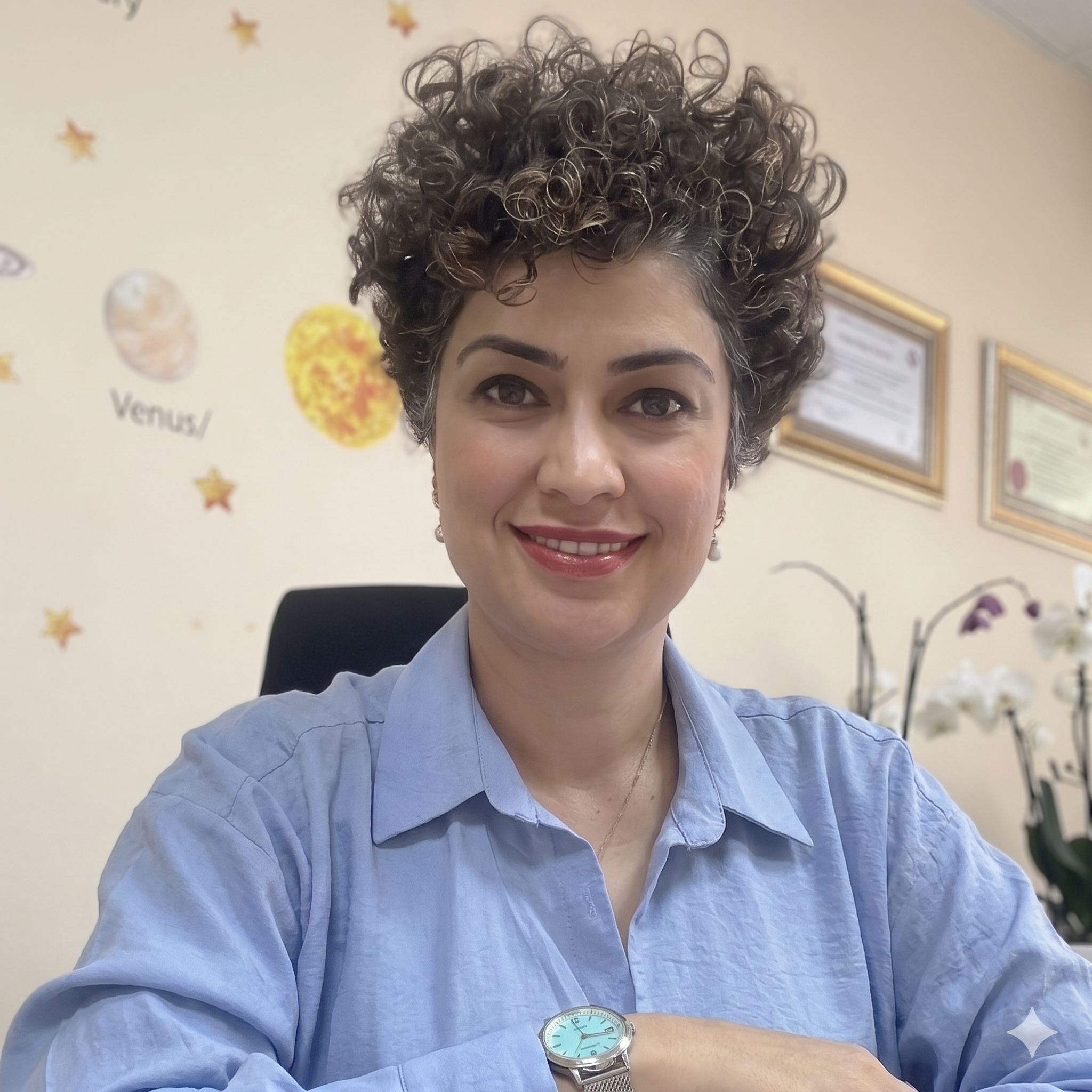
Doç. Dr. Mehtap Eroğlu
Associate Professor, Child and Adolescent Psychiatrist. Over 15 years of clinical experience. Ankara University Faculty of Medicine graduate.
View Full ProfileRelated Articles

What is Neurodevelopmental Assessment? Scientific Foundations of Child Development Monitoring

WISC-R Intelligence Test: Cognitive Assessment Guide for Children

Infant Psychiatrist Ankara: Early Mental Health and Development Guide

Learning Disabilities and Dyslexia in Children: Comprehensive Parent Guide
Speech Disorders and Stuttering: A Comprehensive Guide for Your Child's Voice